
Configuration Options
- Flange or screw plug mounting by tank drawing
- Heated length and surface loading matched to the oil and heat-up duty
- Terminal and control interfaces specified for the installation
Tubular & Immersion
An oil immersion heater warms oil in a tank or reservoir by transferring heat from its wetted sheath. Provide the oil grade, starting and target temperatures, and the tank drawing. The oil condition and movement near the element guide the heated area, watt density and placement.
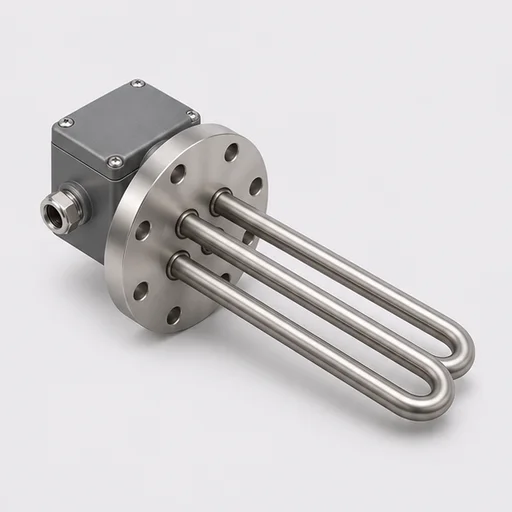
Configuration
The final construction depends on your drawing and operating conditions.
Send the oil datasheet and the tank drawing together. Include the cold-start conditions, the warm-up target and the lowest oil level while the heater is energized.
| Design input | What to provide |
|---|---|
| Oil grade and viscosity | Identify the lubricant, hydraulic oil or heat-transfer fluid. Include the cold-start temperature and available viscosity and film-temperature data. |
| Heat-up and surface loading | Give oil mass or volume, required heat-up time, temperature rise and heat loss if known. Describe agitation, sludge or existing deposits. |
| Tank fit and oil level | Show the process connection, active length, insertion depth and removal clearance. Mark the minimum oil level relative to the heated section. |
| Deep fryer heating elements | For a commercial fryer, send the oil well drawing, heater profile, basket clearance and original rating for each element. |
| Flow-through oil heating | For a separate flow-through chamber, provide the minimum and normal flow, inlet and outlet temperatures and operating pressure. |
Applications include hydraulic reservoirs, lubrication oil tanks and heat-transfer oil systems with a compatible wetted assembly.
Product catalog
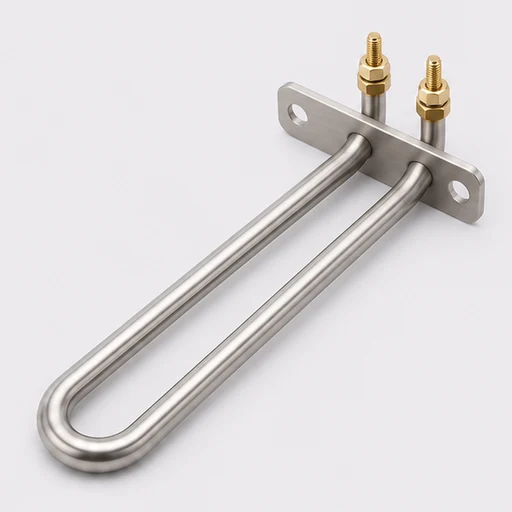
Tubular & Immersion
Formed tubular immersion elements configured for commercial fryer oil wells.
View product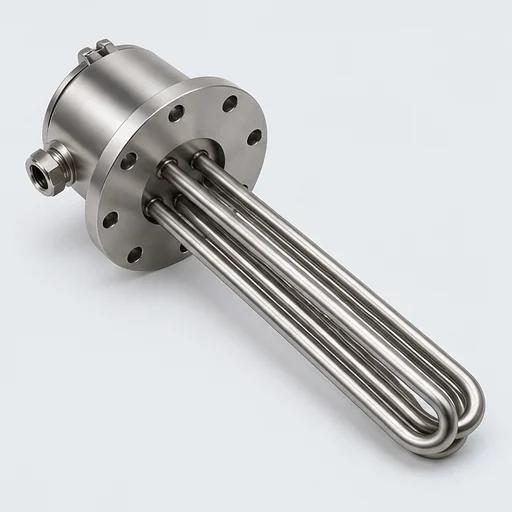
Tubular & Immersion
Configurable immersion assemblies for water, oil and other compatible process fluids.
View productTubular & Immersion
Flange-mounted immersion assemblies for process vessels and tanks.
View product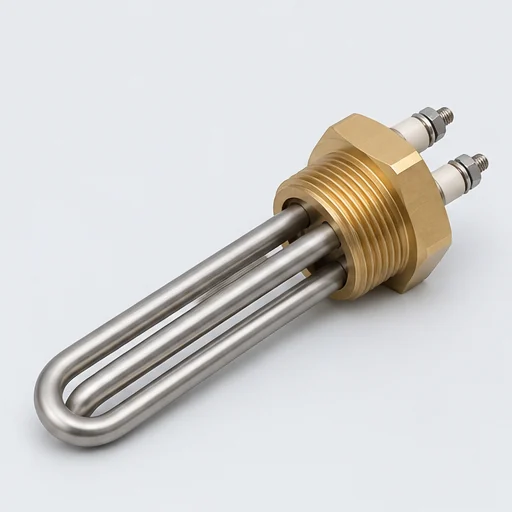
Tubular & Immersion
Threaded immersion assemblies sized around your port and fluid conditions.
View product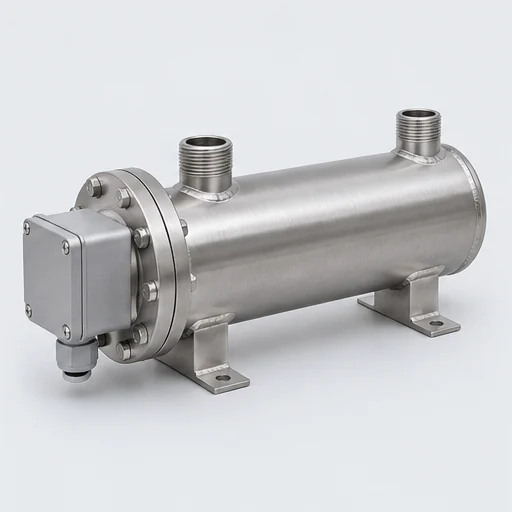
Tubular & Immersion
Flow-through process heating assemblies for specified flow and temperature rise.
View productInclude your technical requirements, target quantity and any supporting drawings.