
Configuration Options
- Probe, surface and assembly constructions
- Grounded, ungrounded and exposed junctions
- Miniature connector, leads or terminal head
Temperature Sensors
Specify a Type K thermocouple probe for the working atmosphere, mounting and instrument input. The sheath, junction, insulation and leads determine the working range of the assembled probe.
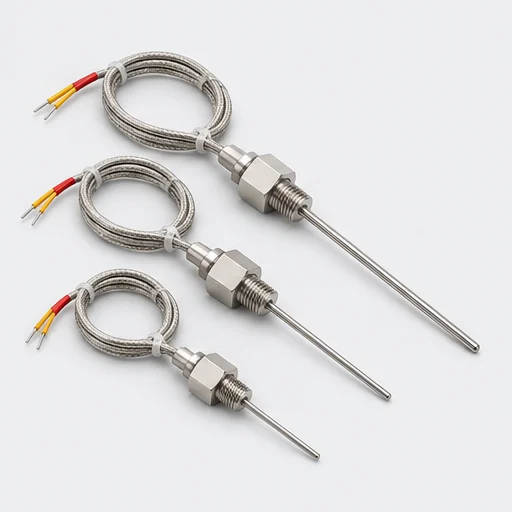
Configuration
The final construction depends on your drawing and operating conditions.
Confirm operating conditions at both the sensing tip and the lead exit. These locations can reach different temperatures and may require different materials.
| Assembly decision | What to specify |
|---|---|
| Sheath and protection | Process atmosphere, exposure time at peak temperature, diameter, and whether the probe needs a protection tube. |
| Sensing junction | Grounded, ungrounded or exposed construction, plus response-time and electrical isolation requirements. |
| Installation | Show the sensing point, installed insertion length and any threads, flange or contact mount. |
| Electrical connection | Type K input, compatible lead and connector type, polarity convention and temperature at the termination. |
Type K assemblies are frequently selected for furnaces, hot tooling and process temperature monitoring.
Product catalog
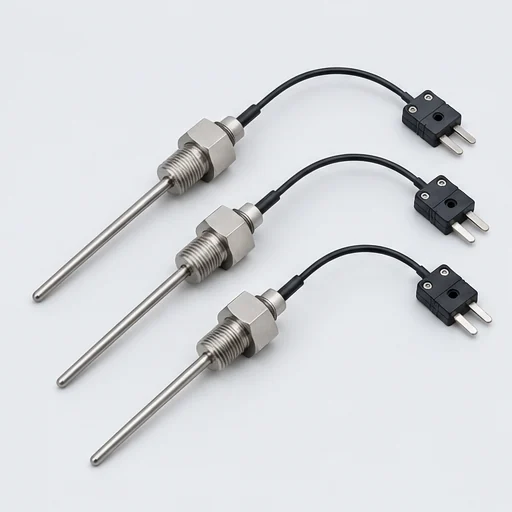
Temperature Sensors
Type J assemblies for industrial equipment and existing Type J instruments.
View productTemperature Sensors
Thread-mounted thermocouple probes configured to fit equipment ports and sensing positions.
View product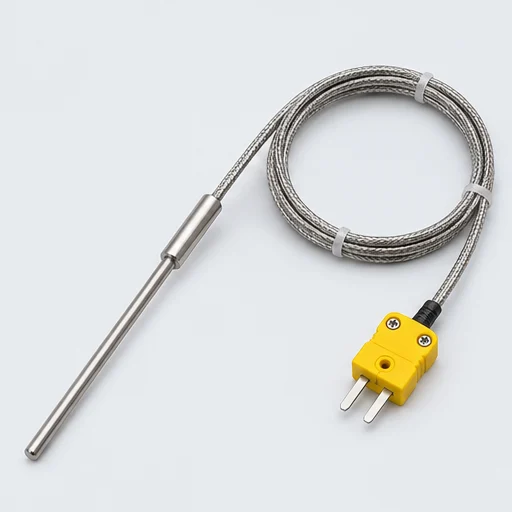
Temperature Sensors
Metal-sheathed MI probes specified for insertion, routing and process conditions.
View product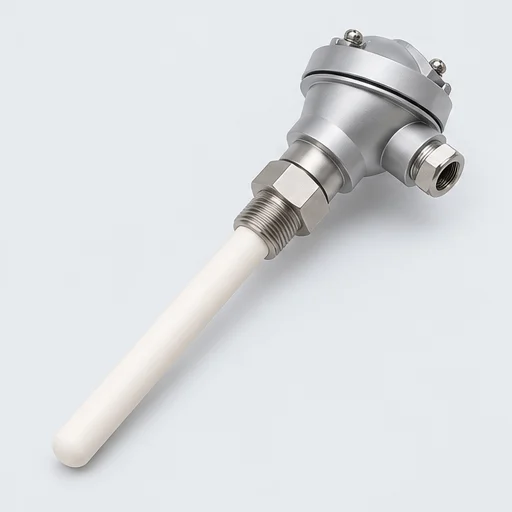
Temperature Sensors
Furnace and kiln probes, including platinum–rhodium Types S, R and B.
View product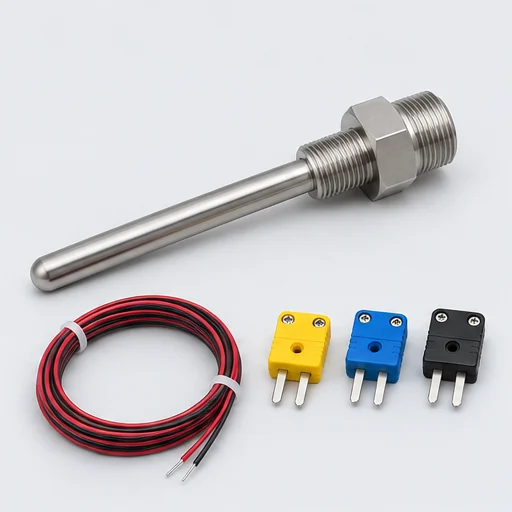
Temperature Sensors
Protect and connect sensor assemblies with specified thermowells, wires and connectors.
View productInclude your technical requirements, target quantity and any supporting drawings.