
Configuration Options
- Protection tube and support by furnace drawing
- Insertion depth and mounting interface matched to the installation
- Type B terminal head and compatible instrument wiring as specified
Temperature Sensors
Type B thermocouples use a platinum–30% rhodium positive leg and a platinum–6% rhodium negative leg. For a high-temperature furnace probe, provide the temperature profile and atmosphere, plus the location of the hot junction, support and terminal head.
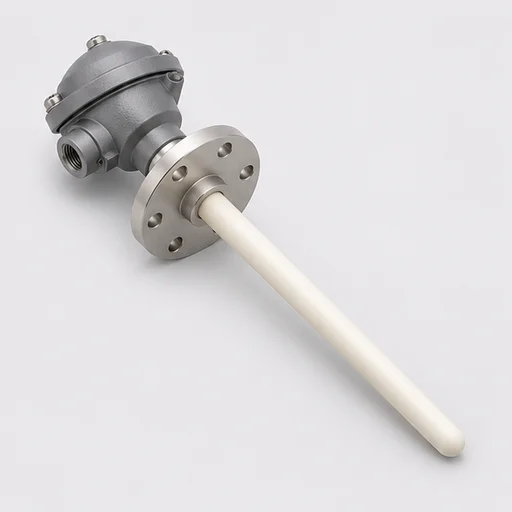
Configuration
The final construction depends on your drawing and operating conditions.
Provide the furnace drawing and specify the operating temperatures at the sensing tip and at the external terminal. Include the geometry of the tube support and room for service access.
| Application detail | What to include |
|---|---|
| Temperature profile | Normal and peak temperatures, time at peak, how often the furnace cycles, and the lowest temperature the controller needs to measure. |
| Tube and atmosphere | Furnace atmosphere and deposits, ceramic protection tube dimensions or material requirements, and possible contact with furnace internals. |
| Mount and support | Mounting reference, flange or adapter drawing, insertion depth, orientation and exposed length between support points. |
| Head and wiring | Type B input, connector or terminal specification, cable entry, clearance, and allowable temperature at the head and any cable transitions. |
Applications to review include high-temperature furnaces and kilns that specify a Type B measurement input and a protected sensing assembly.
Product catalog
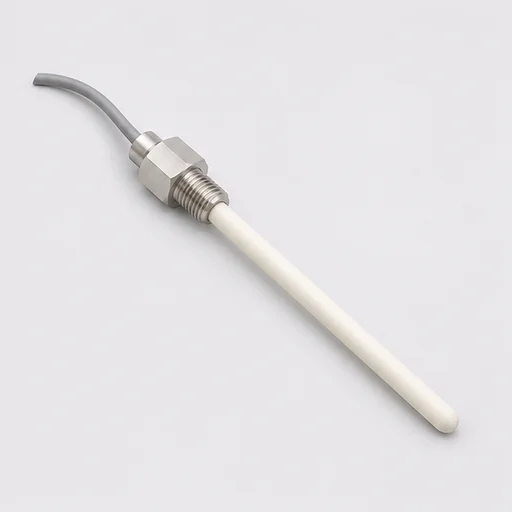
Temperature Sensors
Platinum–rhodium Type R probes configured for furnace and kiln measurements.
View product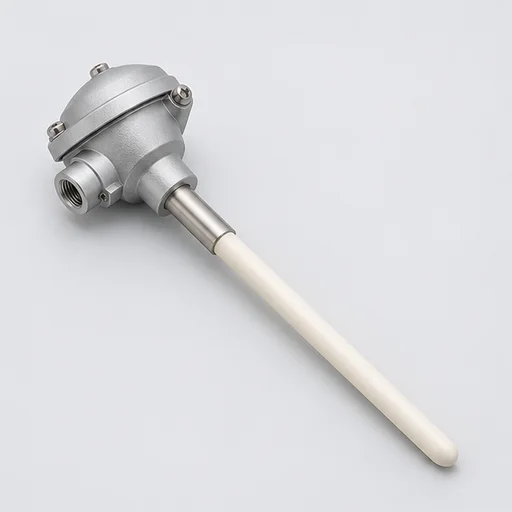
Temperature Sensors
Platinum-based assemblies configured for furnace and kiln temperature measurement.
View product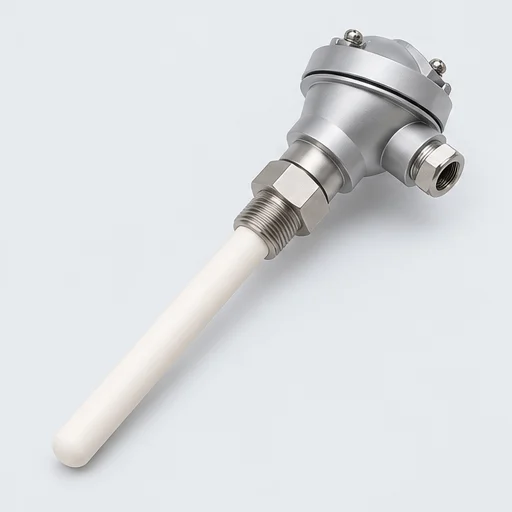
Temperature Sensors
Furnace and kiln probes, including platinum–rhodium Types S, R and B.
View product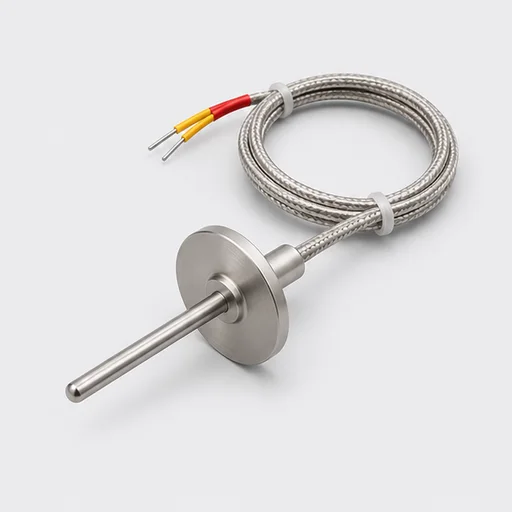
Temperature Sensors
Flange-mounted temperature probes configured to the mating interface and installed sensing depth.
View productInclude your technical requirements, target quantity and any supporting drawings.