
Configuration Options
- Sheathed probes with application-specific mounts
- Grounded or ungrounded junctions as specified
- Type E connector, lead or terminal-head termination
Temperature Sensors
Type E uses a nickel-chromium positive leg and a copper–nickel negative leg. It produces a relatively large voltage change per degree among common thermocouple types over many practical temperature intervals. Specify the Type E input and the probe assembly for your process.
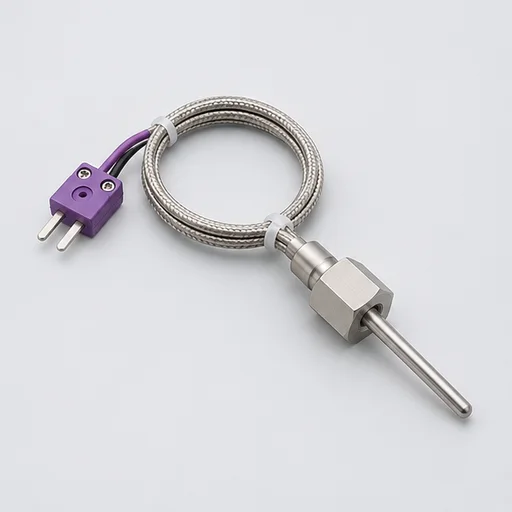
Configuration
The final construction depends on your drawing and operating conditions.
Confirm the instrument is configured for the Type E reference function. Provide the measurement interval and description of the process to guide the probe design.
| Selection factor | What to specify |
|---|---|
| Signal and accuracy | Provide the Type E instrument model, measurement interval and allowable error. Probe tolerance, instrument accuracy and installation each affect the reading. |
| Sheath and mount | Define process exposure, sheath material, installed insertion depth and mounting dimensions to locate the sensing point. |
| Junction and response | State response and electrical isolation requirements so the junction can be selected for the installation. |
| Lead and connector | Identify the Type E cable or connector, local polarity convention, cable length and maximum lead temperature. |
Type E probes are considered for process monitoring, test equipment and OEM replacements with compatible Type E instrumentation.
Product catalog
Temperature Sensors
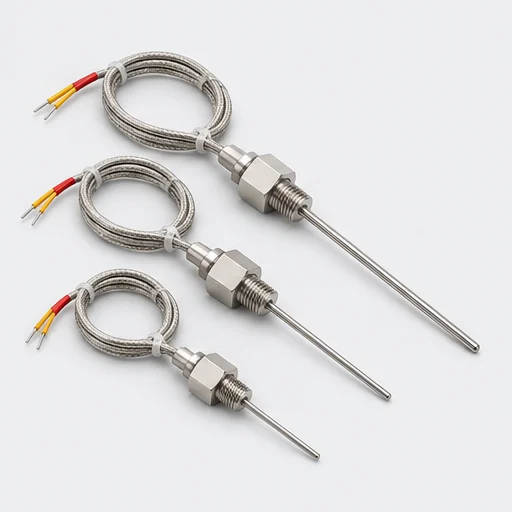
Type K probes and assemblies with application-specific connections and mounting.
View productTemperature Sensors
Thread-mounted thermocouple probes configured to fit equipment ports and sensing positions.
View product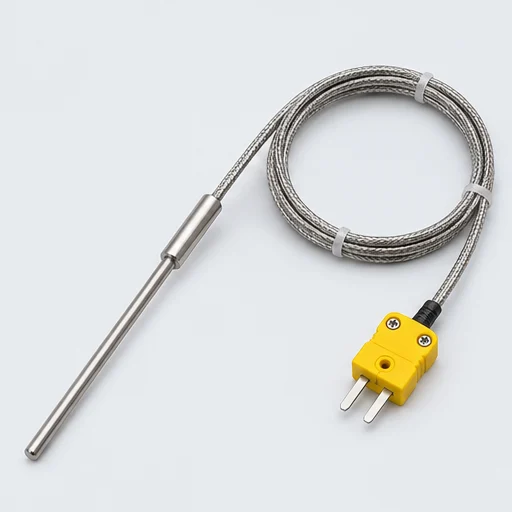
Temperature Sensors
Metal-sheathed MI probes specified for insertion, routing and process conditions.
View product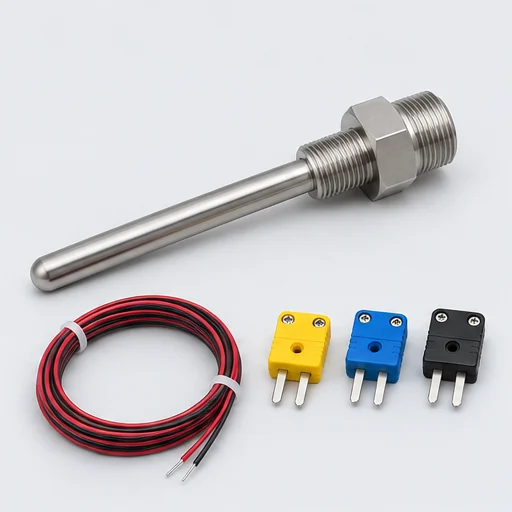
Temperature Sensors
Protect and connect sensor assemblies with specified thermowells, wires and connectors.
View productInclude your technical requirements, target quantity and any supporting drawings.